
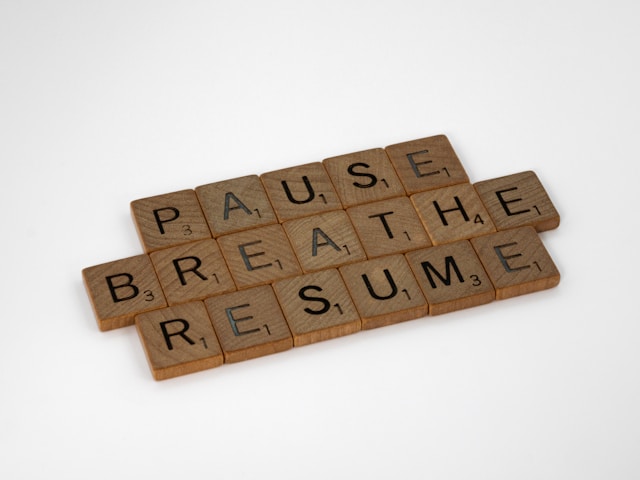
I notice something with almost every client I work with. They rush.
Not because they’re in a hurry. Because silence feels dangerous.
A two-second pause while searching for a word. A breath before responding. A moment of thinking before speaking. For the person listening, it’s nothing. Less than nothing.
For the person speaking English as an additional language, it can feel like failure.
I want to offer a different way to see the pause.
What the research says
Studies[1] on conversation show something surprising:
- Listeners do not register pauses under about half a second as unusual[2].
- Pauses of one to two seconds feel thoughtful, not slow[3].
- Pauses longer than that signal consideration, not incompetence.
- The person speaking always feels the pause more acutely than anyone listening.
What my students have taught me
One client, Blaise (not his real name), told me: “I panic when I can’t find the word. I feel everyone is impatient as they are waiting for me to speak. I want to say ‘sorry’ or just give up.”
So, we practised something simple. Instead of filling the silence with an “um” or “sorry”, we just let it sit. One breath. Then the word.
A few weeks later, Blaise said: “I paused for about four seconds in a meeting. No one said anything. No one looked at me strangely. I found the word. And I didn’t apologise afterwards. I’ve never done that before.”
Three ways to practise comfortable pausing
- Breathe before you speak – not because you need air. Because the breath buys you one second to find your word.
- Say “let me think about that”. This is not an apology. It’s an honest response. It buys you time and signals thoughtfulness.
- Notice when you rush. The next time you feel yourself speeding up to avoid a pause – stop. Take a breath. Then continue.
A reframe
The pause is not evidence that your English is weak. The pause is evidence that you are thinking. And thinking is not a weakness. It is the entire point of conversation.
Where do you feel the most pressure to speak fast? Meetings? Social situations? On the phone?
- Do you want to practise pausing without pressure? Join “3 days to conversation ease” – a free text-based challenge. Each day you receive one short prompt via email. You reply with a short written answer (or just think about it – no recording required). Email me to begin the challenge.
[1] https://papers.ssrn.com/sol3/papers.cfm?abstract_id=5119651
[2] https://www.business-standard.com/article/news-ani/keep-pauses-short-to-make-conversations-more-effective-115100100448_1.html
[3] https://www.psychologytoday.com/us/blog/communication-uncovered/202509/the-silent-signal

